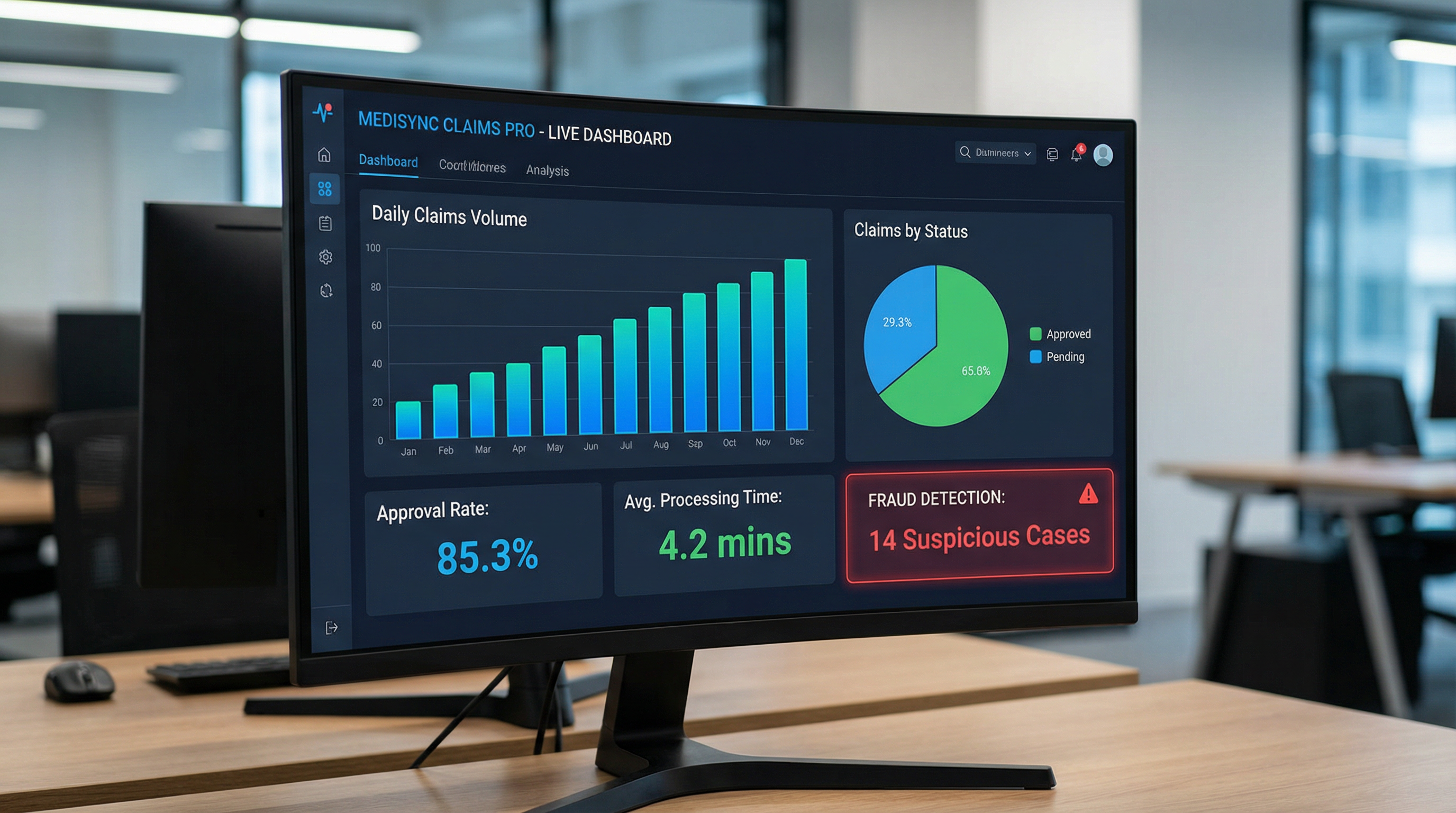
The State of Healthcare Claims in Malaysia 2024: AI Adoption, Efficiency Gaps & the Path Forward
A comprehensive analysis of Malaysia's healthcare claims landscape, examining the current state of digital adoption, key inefficiency drivers, and how AI-powered platforms are reshaping the industry.
MediLink-Global Research Team
Healthcare Technology Research
Malaysia's healthcare claims ecosystem is at an inflection point. After decades of incremental digitisation, the convergence of AI technology, regulatory pressure, and post-pandemic operational demands is driving a fundamental shift in how claims are processed, adjudicated, and analysed.
This report synthesises data from MediLink-Global's platform — which processes over 10 million claims annually across Malaysia, Singapore, Indonesia, Bangladesh, and China — with industry surveys, regulatory publications, and interviews with senior executives from leading insurers, TPAs, and hospital groups.
Current State: Significant Progress, Persistent Gaps
Malaysia has made meaningful progress in healthcare claims digitisation over the past decade. Electronic claims submission is now the norm among major insurers and TPAs. Real-time eligibility verification is available at most panel providers. Cashless treatment has become the expected standard for insured patients.
However, significant inefficiencies persist. Our survey of 45 Malaysian insurers and TPAs found that:
The AI Adoption Gap
Despite widespread awareness of AI's potential in claims processing, adoption remains limited. The primary barriers cited by survey respondents are: data quality concerns (58%), regulatory uncertainty about automated decision-making (47%), integration complexity with legacy systems (43%), and cost of implementation (38%).
These barriers are real but surmountable. MediLink-Global's experience across hundreds of implementations demonstrates that a phased approach — starting with AI-assisted adjudication rather than full automation — can deliver significant benefits while managing risk.
Key Efficiency Drivers for 2024 and Beyond
Based on our analysis, the following capabilities will define leading claims operations in Malaysia over the next 3–5 years:
1. Real-time clinical decision support: AI systems that can assess medical necessity and appropriateness in real-time, at the point of pre-authorisation, rather than retrospectively during claims adjudication.
2. Predictive analytics for cost management: Moving from reactive claims analysis to predictive modelling that identifies high-risk members and interventions before costs escalate.
3. Interoperability and data exchange: HL7 FHIR-based integration between providers, payors, and national health data infrastructure — enabling seamless data flow and reducing manual data entry.
4. Blockchain for audit trails: Immutable audit trails for claims decisions, particularly for complex or disputed cases, reducing litigation risk and improving regulatory compliance.
Recommendations for Malaysian Payors and TPAs
Based on our analysis, we recommend the following priorities for Malaysian claims operations in 2024:
1. Invest in data quality: AI is only as good as the data it is trained on. Investing in data standardisation, validation, and enrichment will deliver returns across all downstream analytics and automation initiatives.
2. Start with HITL, not full automation: A Human-in-the-Loop approach delivers 70–80% of the efficiency benefits of full automation while maintaining human oversight for complex cases and regulatory compliance.
3. Engage with regulatory bodies proactively: Bank Negara Malaysia and the MOH are actively developing frameworks for AI in healthcare. Early engagement positions organisations as thought leaders and ensures that regulatory requirements are built into technology investments from the start.
4. Measure what matters: Establish baseline metrics for turnaround time, rejection rates, leakage, and operational costs before implementing new technology. This enables accurate ROI measurement and continuous improvement.
Key Takeaways
- Only 38% of Malaysian insurers and TPAs have implemented AI-powered claims adjudication
- Average claims turnaround time of 4.8 days — 2–3x longer than achievable with modern platforms
- Claims rejection rates average 14%, indicating significant data quality and coding issues
- HITL approach delivers 70–80% of full automation benefits while maintaining compliance
Interested in implementing these insights?
Request a Demo