Understanding Fraud, Waste & Abuse in Healthcare Claims
A deep dive into the patterns, costs, and detection methods for FWA in Malaysia's healthcare system, with data from MediLink-Global's claims analytics platform.
MediLink-Global Analytics Team
Claims Intelligence & Analytics
Fraud, Waste & Abuse (FWA) in healthcare claims represents one of the most significant financial challenges facing Malaysian insurers, TPAs, and self-insured corporates. Industry estimates suggest that FWA accounts for 8–12% of total healthcare expenditure in Malaysia — translating to billions of ringgit annually in unnecessary or improper payments.
Understanding the distinction between fraud, waste, and abuse is critical for designing effective detection strategies. Fraud involves intentional deception for financial gain — such as billing for services not rendered, upcoding procedures, or fabricating diagnoses. Waste refers to overutilisation or inefficient use of resources without intentional deception — such as unnecessary diagnostic tests or excessive medication prescriptions. Abuse involves practices that are inconsistent with sound medical, business, or fiscal practices — such as billing for medically unnecessary services.
Common FWA Patterns in Malaysia
Based on MediLink-Global's analysis of over 10 million claims processed through our ECCS platform, the most prevalent FWA patterns in Malaysia include:
AI-Powered Detection Methodology
Traditional FWA detection relied on rule-based systems — if a claim exceeded a threshold or matched a known pattern, it was flagged. While effective for known schemes, rule-based systems are easily circumvented by sophisticated fraudsters who adapt their billing patterns to stay below detection thresholds.
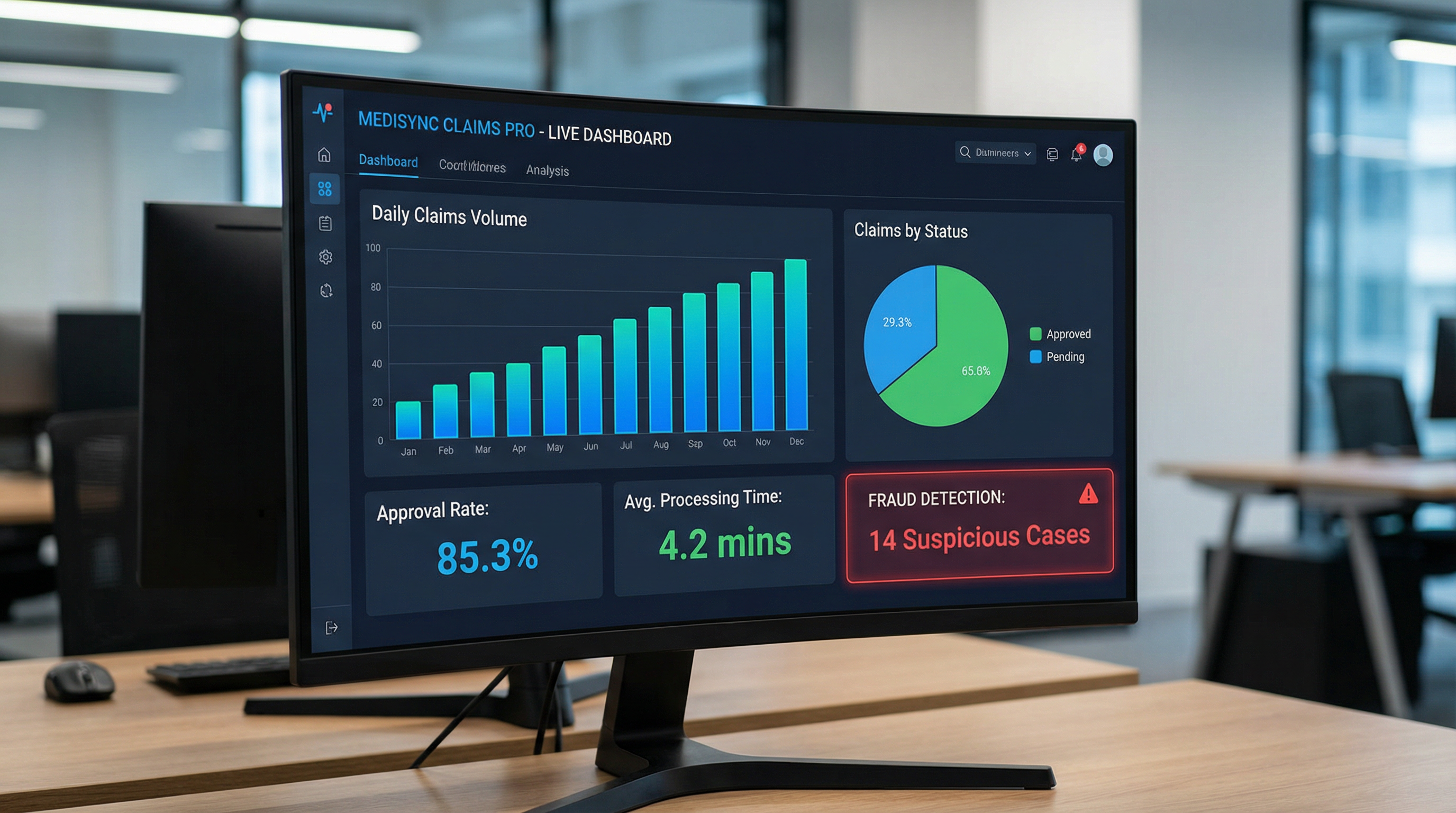
MediLink-Global's approach combines rule-based detection with machine learning anomaly detection. Our models are trained on historical claims data to establish normal billing patterns for each provider, diagnosis code, and procedure. Claims that deviate significantly from these baselines — even if they don't trigger specific rules — are flagged for review.
The system also employs network analysis to identify collusion between providers and members, temporal analysis to detect unusual billing spikes, and cross-reference checks against national drug databases and procedure code guidelines.
ROI of FWA Detection
For a mid-sized Malaysian insurer processing RM 200 million in claims annually, a 3% reduction in FWA translates to RM 6 million in savings — typically representing a 10–15x return on investment in detection technology. Beyond direct financial savings, effective FWA detection also reduces moral hazard, improves provider relationships, and strengthens regulatory compliance.
Key Takeaways
- FWA accounts for an estimated 8–12% of total healthcare expenditure in Malaysia
- Medically unnecessary services represent the largest category of flagged claims (34.2%)
- AI anomaly detection catches sophisticated schemes that rule-based systems miss
- A 3% FWA reduction on RM 200M claims yields approximately RM 6M in annual savings
Interested in implementing these insights?
Request a Demo